Every point is a titled recipe with a full explanation.
IITS Hong Kong · YAI Zero-Waste City · YAI-2602
01 / 22
Roadmap
How we will talk — four beats
02
Legal game first, then capital, then repeatable scoring.
01
Rules
The field OS. How the mat splits, how 180s runs, how balls score, what makes a robot legal, which moves warn or DQ. Without rules, every later win recipe is fiction.
02
Capital
L1–L5 is entry language, not a medal catalog. Name the problem, change one thing, try again — same habit on match day. Class buys a ticket and shared words, not an automatic podium.
03
Win craft
Cycles and data. Reliable intake, repeatable shots, dual-robot roles, stopwatch practice — that is how the score table becomes a two-round total. Same pattern in international ball games.
04
Character
Respect the line and warnings, log honest hit-rates, finish under pressure, debrief without blame. Medals fade; these habits decide whether practice reaches the scored match.
IITS Hong Kong · YAI Zero-Waste City · YAI-260202 / 22
01 · RULES
01
Learn the rules: the field’s operating system
Rules
Field and task — what game you are playing
04
Official mat: green Starts below; five top circles (2 blue + 3 green, larger center) = score targets.
220×180
Field cm
Rule size. Official mat art.
30×30
Green Start
BL/BR green Start pads (raised to match tiles).
5 circles
2 blue + 3 green
Top blues far; larger center green = +5; side greens = +10.
Hard law: robots stay out of the top bin zone. Only the ball may cross in the air into a circle.
IITS Hong Kong · YAI Zero-Waste City · YAI-260204 / 22
Rules
Scoring — where every point comes from
05
+20
Top blue circles
Two blues = far / high
+10
Side green circles
Near left/right
+5
Larger center green
Bigger = +5 not +10
+1
In zone, miss
Not in a circle
×2
Same color ≥3
Center (+5) excluded
Final = two-round sum. Blue +20; side green +10; larger center green +5 (no ×2). Miss in zone +1.
IITS Hong Kong · YAI Zero-Waste City · YAI-260205 / 22
Rules
Legal robot and process red lines
06
Robot compliance (measured at check-in)
Size ≤ 30×30×30 cm
All axes. Arms, thrower, wheels count. Measure every session — not 15 minutes before the match.
Motors ≤6 · servos ≤2 · sensors ≤4
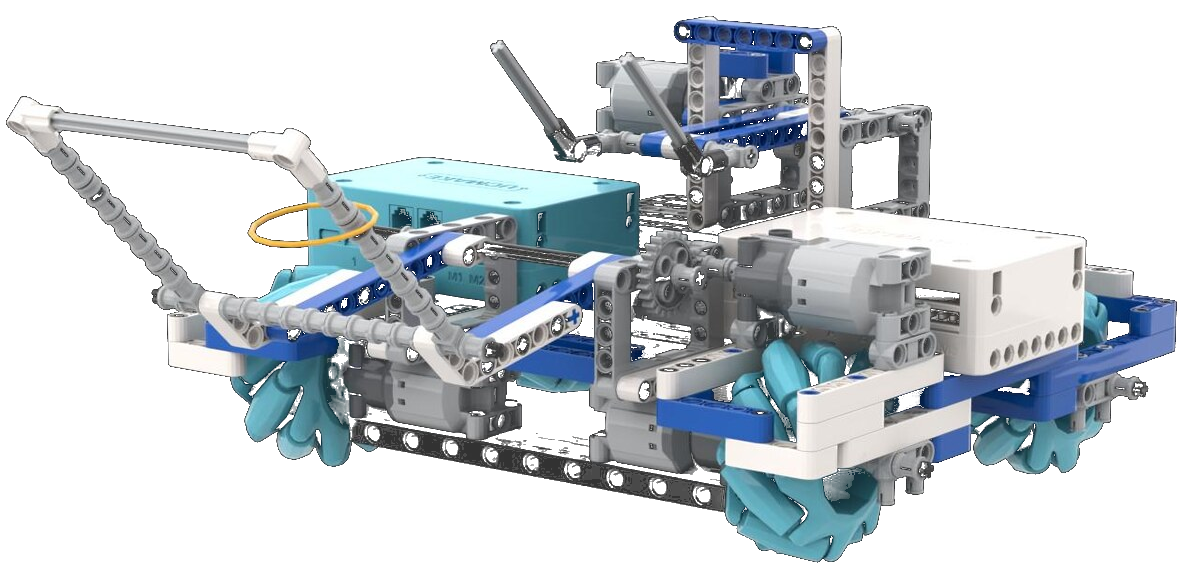
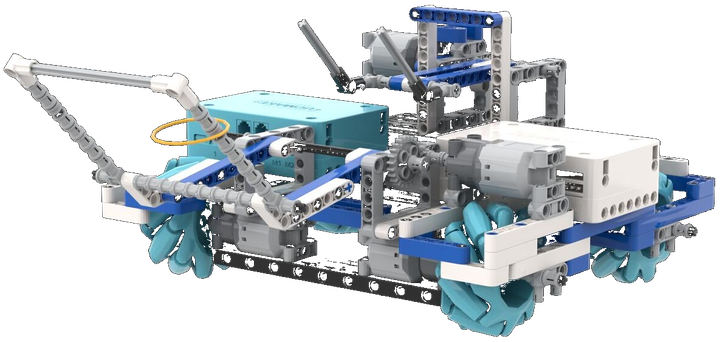
Same caps as the controller. Ref programs use drive + grab + throw and still fit; count ports before adding.
LEGO structure · no metal structure
Body must be LEGO-compatible. Metal structure fails inspection. Creativity stays inside legal parts.
One main controller
One board per robot. Pairing, upload, battery status live there; pit crew must read lights and swap packs.
Process red lines (warn / DQ)
Check-in 15 minutes before
Staff check size and rules. Late or uninspected mods = already behind. Pit list: ruler, packs, program version.
Deploy within 1 minute
Called → ready is a short window. Practice full box-to-start deploy, not only field runs.
No control before referee signal
Moving early = warning. Hands-off sticks until signal — train it like a reflex.
Raise hand to intervene · clock runs
Special cases need permission; match continues. Restore pose after. Not a free pause.
3 warnings → disqualification
Early drive, illegal field touch, destructive speed can warn. Warnings are a KPI — target 0.
Confirm and sign on the spot
Stop on end signal. Score confirmed and signed on field. Dispute window is there, not later.
IITS Hong Kong · YAI Zero-Waste City · YAI-260206 / 22
02 · CAPITAL
02
Rules clear — now the capital you bring
Capital
L1–L5 is shared language, not a medal catalog
08
Words you use together to change the robot and the program are capital that still works on match day.
L1
Structure & force · launcher
Gears, links, CG, throw. Why grip fails, why shots tip the bot, why far bins need another arm — physics language.
L2–L3
Drive & remote
Motors, loops, gamepad. Move, turn, basic grab/release — where most teams clear the entry bar.
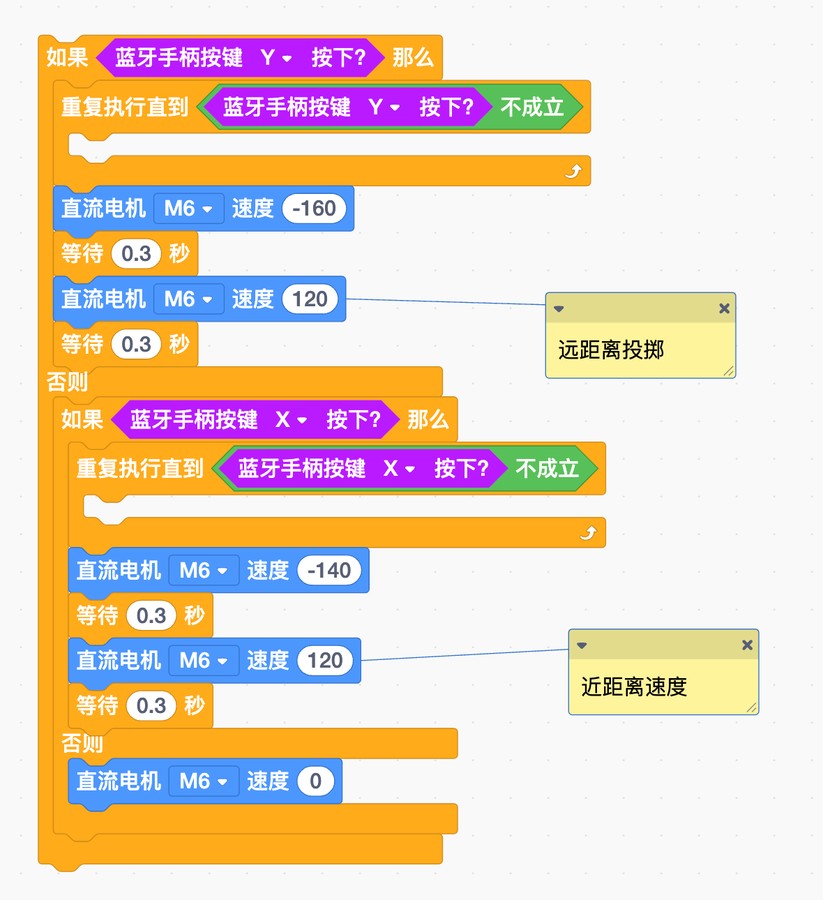
Not swapping sensors/motors. Pack a move chain (far/near throw) into one remote macro / custom block — fewer mis-taps, faster pit edits.
IITS Hong Kong · YAI Zero-Waste City · YAI-260208 / 22
Gap
Enter ≠ stable scoring
09
180s · two-round sum. Entry is the ticket; stability is legal cycles that still repeat under pressure.
ENTER
Can enter = rules ticket
Pass size check-in
Box measured, structure legal, controller live. Fail here and the rest is zero.
Basic drive and grab/throw
Move, turn, complete at least one pick–move–release. Proof you can enter the game.
Know clock and midline
State 180s and “no robot part in classification.” Unknown boundaries leak points as fouls.
One legal full loop
Not a high score — a complete legal sequence. Entry proof, not podium standard.
STABLE
Scores steady = win standard
Primary path matches the table
Agree before start: sides +10 default or far +20 when earned; color script on paper. Guessing live donates points.
Intake and shots are measured
Logs: hits out of 10 by target. “Feels fine” is not stable.
Two-robot roles don’t collide
Clearer and shooter paths separated. Two heroes on one pile zero each other’s cycles.
Round two holds
Battery, looseness, and nerves show in R2. Stable teams aim R2 ≈ R1, not a heroic R1 only.
IITS Hong Kong · YAI Zero-Waste City · YAI-260209 / 22
03 · WIN CRAFT
03
Win craft: turn the score table into a two-round total
Map
Peer games — four transfers that pay here
11
Foam-ball, tiered-goal games keep proving: reliability and cycles beat flair.
01
Tiered goals: cash first, ceiling second
High/far vs low/side is a global pattern. Strong teams fill the reliable tier (here: side +10) before data promotes far +20 — not all-in on style at kickoff.
02
Intake before fancy drive
Rollable objects punish weak intake; a missed grab is a zero-point cycle. Same for 6 cm balls: grasp rate is mechanism KPI #1.
03
Roles, not dual heroes
Alliance thinking: one clearer stages balls, one shooter scores. Total cycles beat two egos on one pile.
04
Stopwatch and log culture
Elite teams manage cycle time and hit tables. Practice without a log mostly repeats the same error.
Transfer methods from international ball robotics — not another event’s statute. Zero-Waste rules remain authoritative.
IITS Hong Kong · YAI Zero-Waste City · YAI-260211 / 22
Clock, color counts, midline/foul risk, hit log. Success = one-sentence R1 data summary before R2 starts.
Round-two discipline: after battery/fastener check, copy the validated R1 script. Ban: “I just thought of a new far shot.”
IITS Hong Kong · YAI Zero-Waste City · YAI-260217 / 22
Practice
Practice systems strong teams share
18
Practice without a log mostly repeats the same error.
One sheet every field block
Required: grasp rate, hits by target, cycle seconds, warnings/near-fouls, R1 and R2 totals. Same format week to week.
Simulate full match flow, not only driving
1-minute deploy, no-touch until signal, 180s, report and sign — process is a skill; learning it live earns warnings.
Warnings as a KPI
Rules: 3 warnings = DQ. Training target is not “warnings are fine sometimes” — it is long-run zero.
Weekly rhythm example
Three ~90 min field blocks: (1) mechanism & hits (2) stopwatch cycles (3) full two-round sim. Class time keeps L1–L5 foundation — don’t hollow it out.
IITS Hong Kong · YAI Zero-Waste City · YAI-260218 / 22
Chain and traps
One chain inside the rules — and effort that usually fails
19
Compute → reliable intake → shots that count → copy across two rounds.
Score script
→
Intake
→
Shoot
→
Two-round hold
Trap: farm center for ×2
Rules: row-1 center is excluded from same-color bonus. Wrong target makes practice more expensive, not better.
Trap: creep over the midline “just a little”
Any part in the classification zone is illegal. Fix trajectory and release — not nose position.
Trap: match-day rewrite / full-battery heroes only
Strong teams ship known-good code; round two needs half-pack and back-to-back data. Live rewrites and full-pack illusion are the two classic collapse sources.
IITS Hong Kong · YAI Zero-Waste City · YAI-260219 / 22
04 · CHARACTER
04
Medals fade. Respect for rules and data does not.
Character
How you show up — eight observable behaviors
21
Respect rules
Midline, signals, and warnings are not trivia. Three warnings can zero a day’s work — respect is competitive skill.
Honest data
4/10 is written 4, not “fine.” Fake hit-rates make the whole team change the wrong part.
Change one thing
Scientific method: otherwise you never know what worked and cannot teach the next driver.
Finish under pressure
Still complete a legal motion in the countdown — without panicking into a line foul or empty grab. Trained, not shouted.
Roles over glory
The clearer’s lane decides shooter space. Late points often come from off-camera staging.
Debrief without blame
Script: “Next round I change…” Work the problem. Blame teams do not improve in R2.
Theme empathy
Zero-waste: sort and cycle. Theme literacy is real — and still not on the score table. Legal points first.
Long horizon
Two steady rounds beat one spike. The format pays for copyable performance, not highlight reels.
IITS Hong Kong · YAI Zero-Waste City · YAI-260221 / 22
IITS Hong Kong · YAI Zero-Waste City · YAI-2602
Rules define a legal match
Field, scoring, compliance, and red lines are the OS. IITS classes give entry language and foundation so you can stand on the start line.